
Employee Experience
Office Management Hacks
Case Study
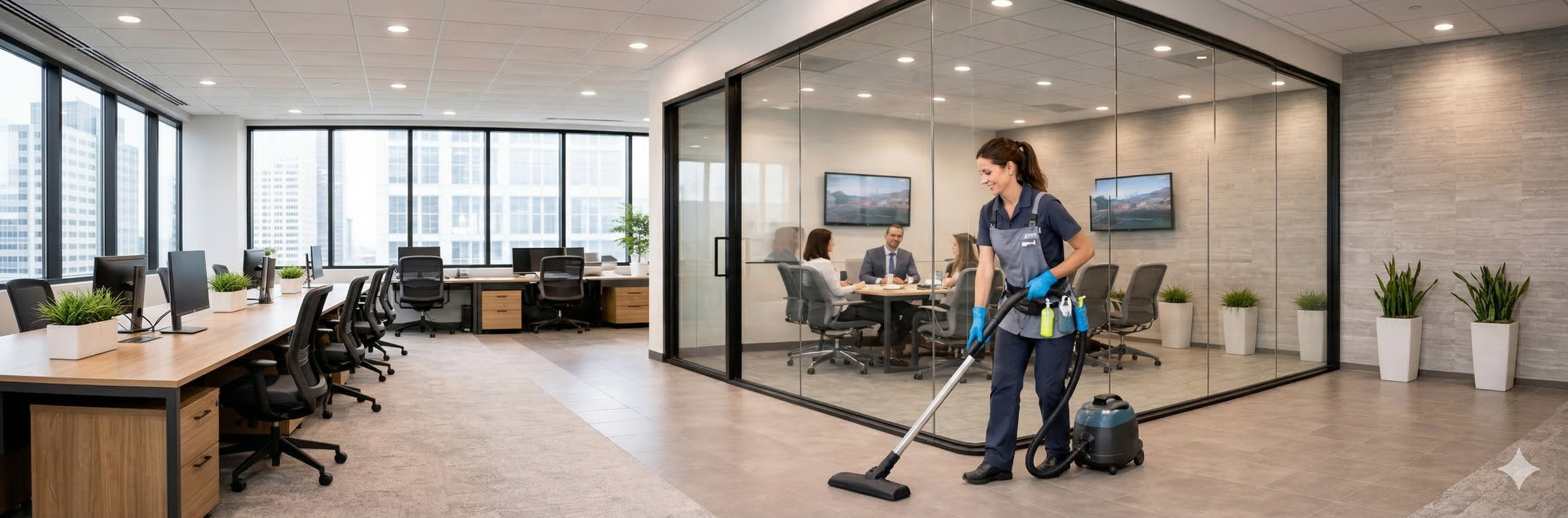

You finally have the keys. As an Expanding Office Manager, leasing a newly built or freshly renovated office space is a major corporate milestone. You have survived the floor plan debates, the IT infrastructure meetings, and the endless contractor delays. But when you unlock the doors for the first time, you are rarely greeted by a pristine, ready-to-use workspace. Instead, you find a layer of fine drywall dust, stray paint splatters on the baseboards, and protective film still stuck to the interior glass.
Before your team can unpack their monitors or brew their first cup of coffee, you need serious construction cleaning. Attempting to move your colleagues into an environment that still feels like an active building site is a recipe for disaster. To transition your space from a hardhat zone to a fully operational headquarters, you need professional post construction cleaning Berlin.
At Officeguru, we know that a "Good job!" is mutual. It requires effort from your team, but it also requires the right conditions provided by the company. You cannot expect high performance in a dusty, chaotic environment.
This guide is designed to help you navigate the crucial handover period. We will break down exactly what makes post-renovation cleaning so specialized, explain the core differences between common building cleaning services, and show you how to prepare your new office for a flawless opening day.
Berlin is in a constant state of architectural evolution. Cranes dot the skyline, historic Altbaus are constantly being retrofitted into sleek coworking spaces, and old industrial warehouses are transformed into modern tech hubs.
This constant construction scene means office managers are frequently tasked with transitioning spaces from the building phase to the operational phase. It is a delicate window of time. The general contractors have packed up their tools, but the space is not yet safe or comfortable for office workers.
Many expanding managers make a critical mistake here: they assume their standard, daily cleaners can handle the mess. They cannot. You need a specialized approach to bridge the gap between construction and daily operations.
When you are opening a new office, you will encounter two vastly different types of services. Understanding the difference between routine cleaning and construction cleaning is the key to protecting your new assets and your budget.
The difference ultimately comes down to the type of dirt, the equipment required, and the end goal of the service.
You cannot begin the former until you have completely finished the latter.
Construction cleaning (often referred to in Germany as Baureinigung) is an intensive, highly detailed process. It is usually executed in two distinct phases to ensure every trace of the building process is eradicated.
This phase happens just as the major construction work wraps up. The focus is on safety and clearing the deck.
This is the meticulous, detail-oriented phase. This is where the magic happens and the building actually becomes an office.
Once the fine construction clean is complete and your team moves in, you switch to routine maintenance (Unterhaltsreinigung).
This is the daily baseline. It relies entirely on the foundation established by the construction clean. When dust bunnies throw a party in your server room, the routine cleaners shut it down.
A standard cleaning service will handle:
Routine cleaning removes daily micro-frustrations. It ensures that when your colleagues arrive on a Monday morning, the office smells fresh and is perfectly primed for them to do a good job.
Trying to save money by having your employees or a standard daily cleaner handle the post-renovation mess is an expensive miscalculation. Here is why you cannot skip a professional construction clean:
Standard vacuum cleaners are not built for industrial sites. Drywall and cement dust are incredibly fine—so fine that they bypass standard vacuum filters and get sucked directly into the motor. If a routine cleaner tries to vacuum a newly renovated office, they will likely burn out their machine's motor within the first hour. Specialized post-construction crews use expensive, industrial HEPA filtration vacuums specifically designed for fine particulate matter.
If you turn on your new office's heating or air conditioning system before the fine dust has been professionally removed, the HVAC system will suck that dust into the ductwork. Every time the air turns on, it will blow a fine layer of white powder across your office. It ruins indoor air quality, triggers employee allergies, and requires highly expensive duct-cleaning services to fix.
Commercial flooring is a massive capital investment. Manufacturers have strict guidelines on how new floors must be treated during their first wash. Using the wrong acidic chemical on a new natural stone floor, or the wrong abrasive pad on a new luxury vinyl, can permanently scratch the finish. Worse, improper initial cleaning often completely voids the manufacturer's warranty. Post-construction cleaners know exactly how to commission new floors safely.
To ensure a smooth transition from your general contractors to your operational team, you need a tight timeline. Use this checklist to manage the handover perfectly:
Two Weeks Before Move-In:
One Week Before Move-In:
Three Days Before Move-In:
Move-In Day:
Opening a new office should be an exciting moment for your company, not a stressful exercise in dust management. By understanding the vital role of construction cleaning, you protect your new physical assets, ensure a healthy air quality for your team, and establish a high standard of excellence from the very first day.
Do not let the mess of construction delay your operational success. Partner with the right experts who can bridge the gap between a building site and a premium workplace.
Ready to transition your new space seamlessly? Sign up here to explore the Officeguru platform. You can easily find any service company in Berlin and book vetted experts for specialized post-construction cleaning, lock in your daily routine maintenance contracts, and guarantee that your new office is perfectly prepped for your team's arrival.