
Employee Experience
Office Management Hacks
Case Study
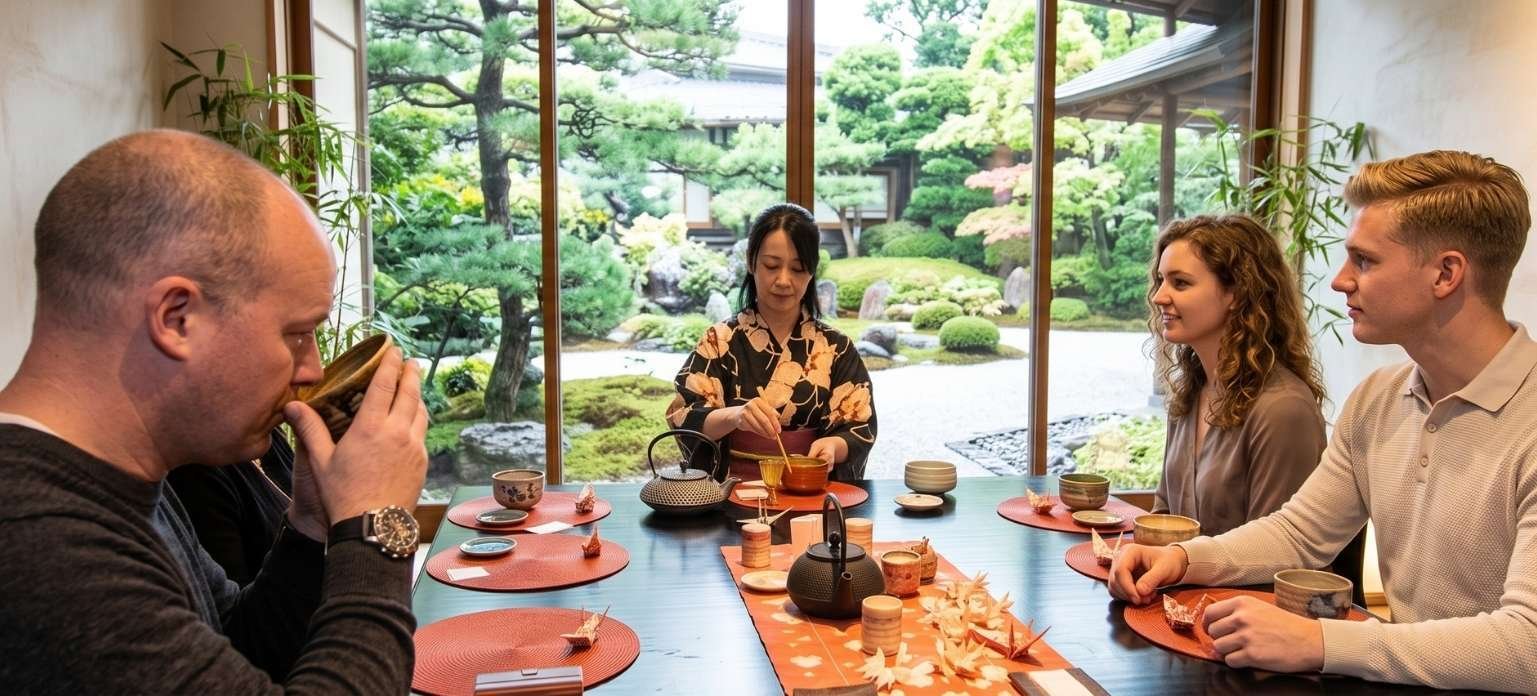

You've run the usual team events. Drinks after work, bowling, another escape room. They can be fun, but they rarely include everyone. A tea ceremony workshop offers something different. It's a calm, shared experience built around focus and presence. It draws on the Japanese tea ceremony, a centuries-old ritual of preparing and serving matcha, and turns that quiet tradition into a practical tool for your team. No alcohol. No pressure to perform. Just your colleagues, slowing down and doing one thing together, well.
Most articles about tea ceremonies focus on history and etiquette. That's interesting, but it's not why you're here. As a People & Culture lead, you care about outcomes: connection, inclusion, and a break that actually resets people. So let's skip the museum tour and translate the tradition into something you can use on a Tuesday afternoon at the office.
A workplace session is not a lecture. It's a guided, hands-on experience, usually 60 to 90 minutes, led by a trained host. Everyone takes part. Here's how a typical session runs.
1. Arrival and settling in (10 minutes). The host welcomes the group and sets the tone. Phones go away. The room quiets down. This alone is a shift for most teams — a rare moment where nobody is expected to reply to anything.
2. A short introduction (10 minutes). The host explains what matcha is and where the ritual comes from. Just enough context to make the practice meaningful, not a history seminar.
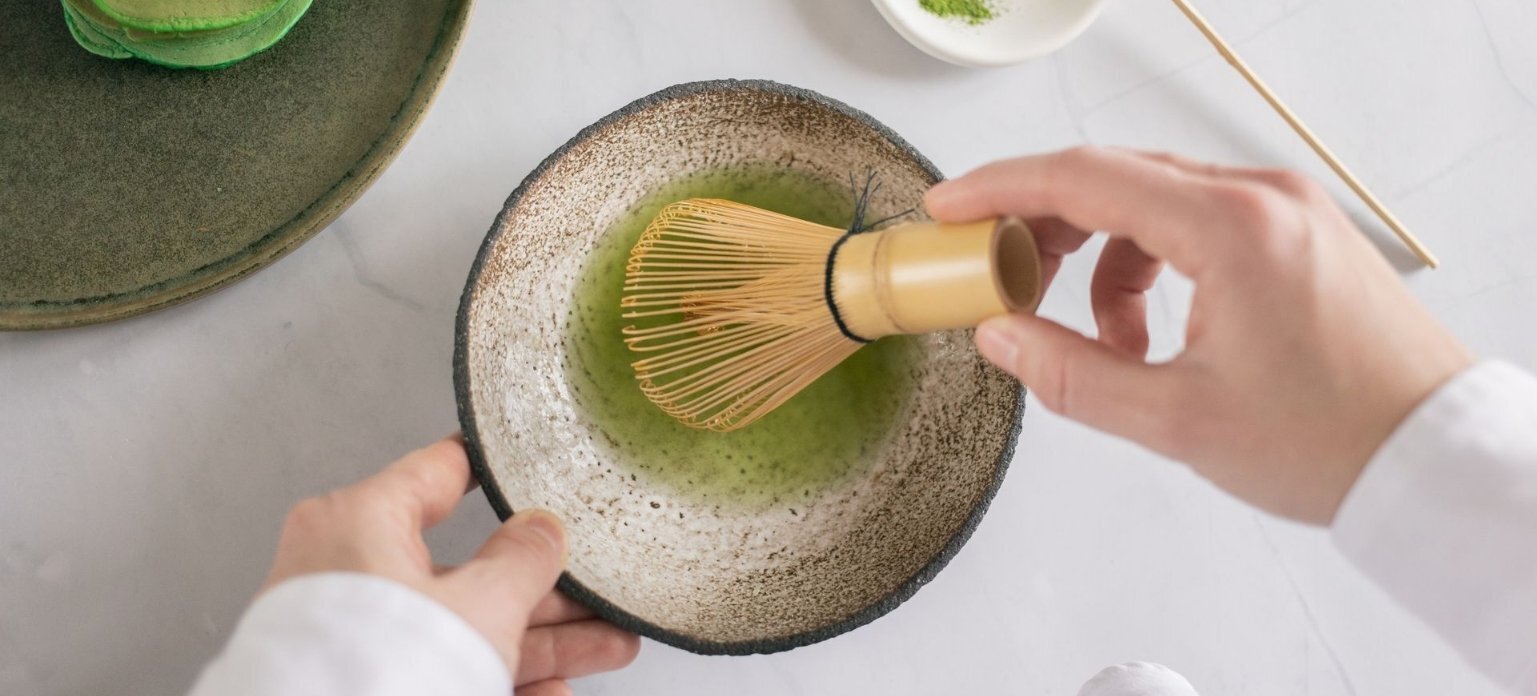
3. Guided preparation (20–30 minutes). Everyone gets their own bowl, whisk, and matcha. The host walks the group through each step: sifting the powder, adding water at the right temperature, whisking until frothy. People work side by side, learning something new at the same pace. It's normal for the room to get quiet here, then break into small bursts of laughter as people compare their results.
4. Tasting and reflection (15–20 minutes). The group tastes what they made and shares a few thoughts. The conversation tends to be softer and more open than a standard meeting. Colleagues who rarely speak up often do. That's the point.
5. Close (5 minutes). A calm wrap-up. People leave a little slower than they arrived — and usually in a better mood.
You can run this in an office kitchen, a meeting room, or an offsite space. All you really need is tables, seating, and a kettle. The host brings the rest.
What does your team walk away with? Not a certificate or a set of forced "learnings." Something simpler: an hour where they did something together that had nothing to do with deadlines. That kind of shared, low-stakes experience is what builds the trust people lean on when work does get busy. You can't force it in a workshop on communication, but it tends to appear on its own over a bowl of matcha.
You might also like: Matcha Workshop in Berlin: A Calm Team-Building Idea for Offices
This is the question most people ask, and the answer explains why the format works so well for teams.
Casual tea drinking is about the result. You want a warm cup, so you add hot water to a bag or a scoop of powder, stir, and move on. It's fast and functional, and there's nothing wrong with that.
A formal Japanese tea ceremony is about the process. In the traditional practice, known as chadō, or "the way of tea," every movement is deliberate. The matcha is sifted to remove lumps. The water sits at a specific temperature rather than a rolling boil. The whisking follows a set motion — a light "W" or "M" shape — until the surface is smooth and frothy. Each utensil is handled with care and cleaned in a particular order. Nothing is rushed, and nothing is skipped.
At home, you might ignore the sifting, eyeball the water, and whisk in ten quick seconds. It still tastes fine. But the ceremony's slowness is exactly what makes it useful at work. When a step genuinely can't be rushed, people stop multitasking. They focus on one small task, at the same time as everyone around them. That shared focus is what quietly turns a drink into a team experience — and it's the part no consumer guide about "the history of matcha" will tell you.

Modern teams are harder to bring together than they used to be. Some people are in the office three days a week, others one. Some don't drink. Some are new and still finding their footing. A good team event has to work for all of them at once, without singling anyone out.
A tea ceremony does that better than most formats. Here's why.
It's a genuine non-alcoholic team event. No one has to opt out or explain why they're not drinking. The activity itself is the point, and everyone takes part on equal footing. For inclusion, that matters far more than offering a soft drink at the bar and hoping people feel welcome.
It levels the playing field. Nobody is good at making matcha on day one. The senior developer and the new intern learn the same skill at the same time. That shared beginner status quietly softens hierarchy for an hour, which is hard to engineer any other way.
It's built for groups. A tea ceremony for groups is designed around people doing the same thing in parallel. It scales naturally from a team of six to a department of thirty, usually by splitting into stations. Quieter colleagues aren't put on the spot, and the louder ones don't run the room.
It's a real reset. This is mindful team building in the honest sense of the phrase — not a buzzword on a slide. The focus on a single, calm task gives people a proper break from screens and notifications. Many leave a session noticeably lighter than they came in.
For hybrid teams especially, this is valuable. When people only overlap in the office now and then, you want those shared moments to build real connection, not just fill a slot in the calendar. A quiet, level, screen-free hour does more of that work than another noisy evening out.
You might also like: Tea Ceremony in Berlin: A Different Kind of Corporate Team Event
If you're considering a session, here's a short checklist to make it easy.
A quick tip: don't bolt the session onto the end of a two-hour strategy meeting. Its value comes from being a clean break, so give it room to be exactly that. Protect the hour the way you'd protect any meeting that matters.
You don't need another loud, late event that half the team quietly skips. A tea ceremony offers the opposite: something calm, inclusive, and genuinely shared. It takes the depth of a traditional practice and puts it to work on the very real challenges of a modern, mixed team — connection, inclusion, and a break that people actually feel.
If you'd like to see what's available and book a session for your team, create an account — it takes a minute, and you can browse verified providers in your area straight away. Officeguru makes it simple to find and book the right host, so you can spend your time on your people instead of on logistics.