
Employee Experience
Office Management Hacks
Case Study
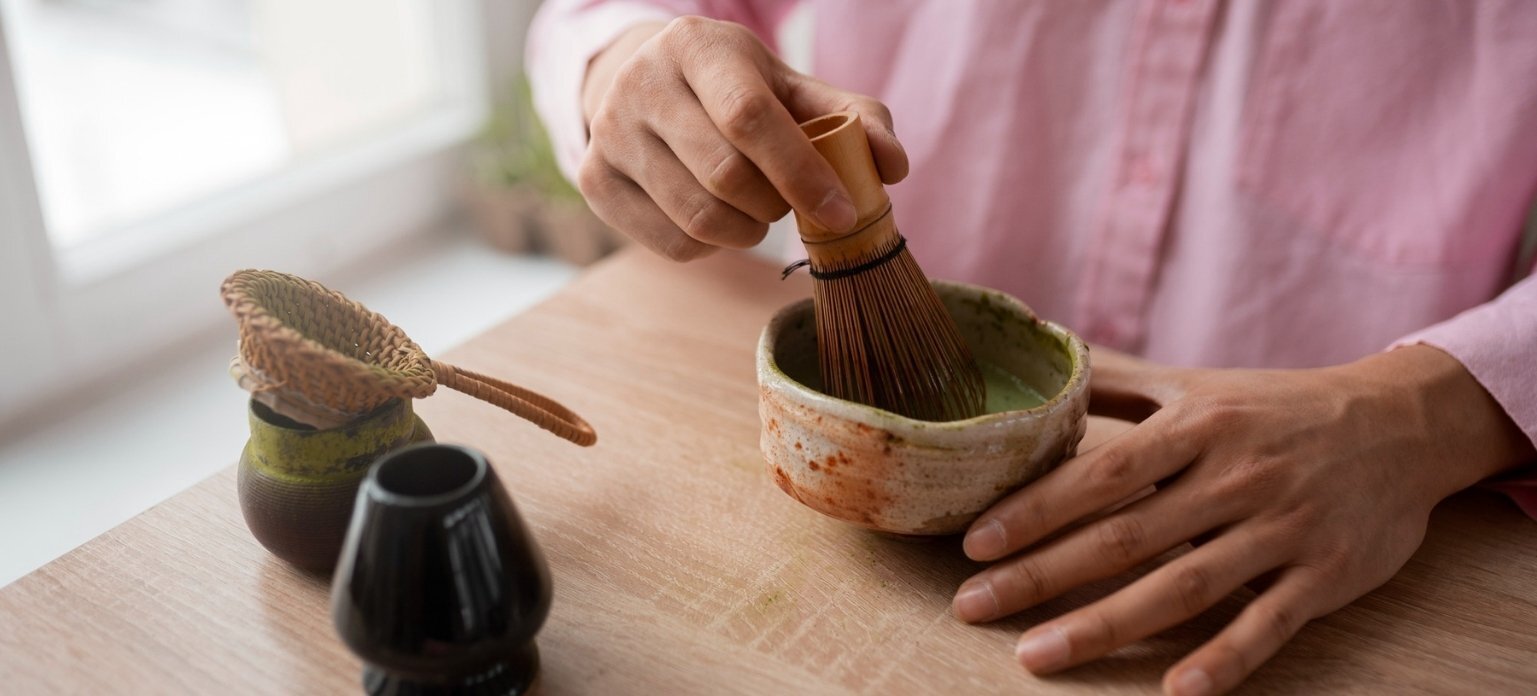

Planning a team event that isn't another escape room or a loud round of bowling? A matcha workshop gives your team something quieter. It's a hands-on session built around the matcha tea ritual, where each person whisks their own bowl and slows down for an hour. For an Office Manager at a Berlin scale-up, that's a low-effort way to bring people together without the usual pressure to perform, compete, or "network." No one has to be good at anything. They just have to show up and taste.
This guide is written for booking, not for buying powder. Plenty of matcha brands run these sessions to sell you a tin at the end. We look at it differently: a matcha workshop is a bookable team event with real logistics, real costs, and no product upsell. Here's what actually happens, what it costs in Berlin, and how to organise one.
A typical session runs 60 to 90 minutes and is led by an instructor who brings all the gear. The flow is simple:
That's it. No slideshow, no icebreaker games, no forced fun. The activity carries the room on its own because whisking takes just enough focus to relax people. It works well as a mid-afternoon reset or a Friday wind-down.
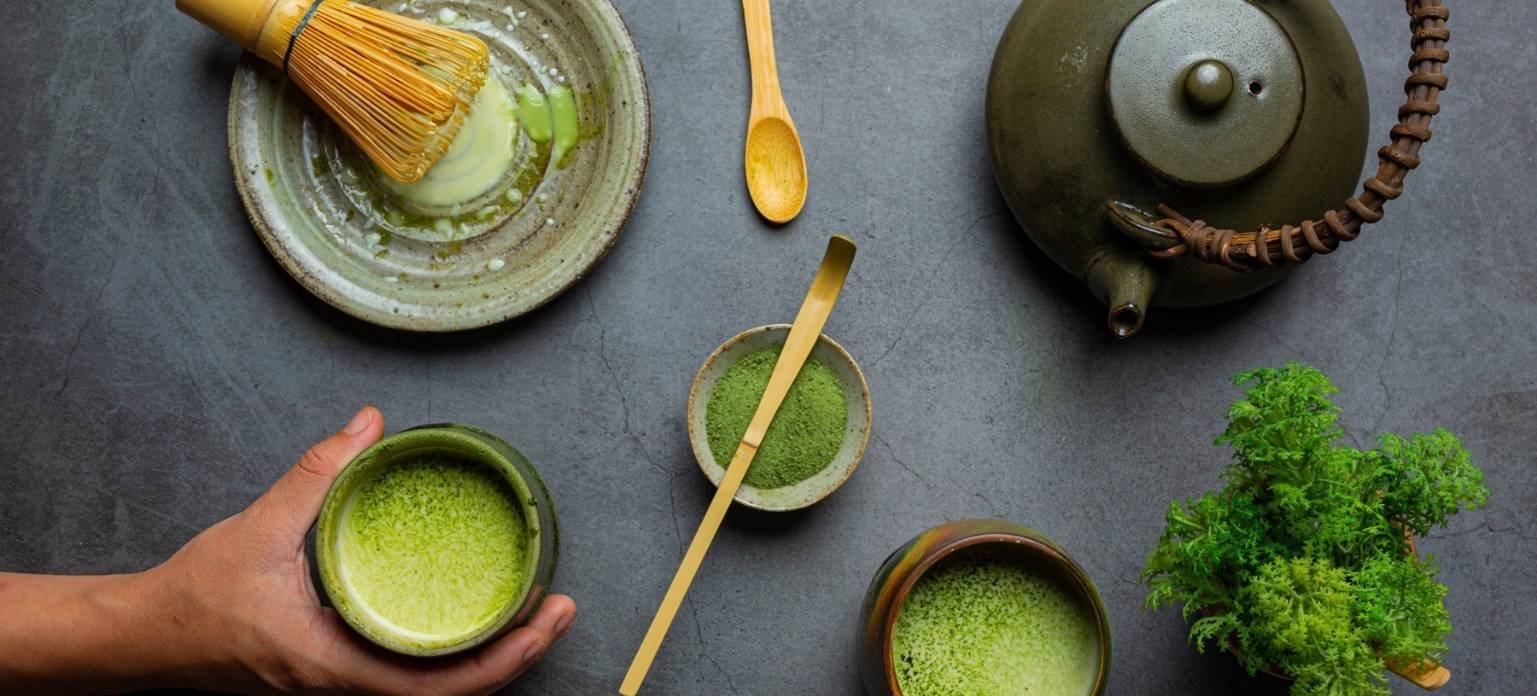
Both come from the same plant, Camellia sinensis, but they're grown and drunk differently. Regular green tea is steeped, then the leaves are removed and thrown away. Matcha is a fine powder made from shade-grown leaves, and you drink the whole leaf whisked into water. That's the key difference: you consume the entire leaf, not just an infusion.
For your team, this matters in one practical way. Matcha carries more caffeine and L-theanine per cup than steeped green tea, so the lift is steady rather than jittery. It suits an afternoon session where you want people alert but calm, not wired.
Most providers run a matcha class in Berlin for groups of 6 to 20. Above that, sessions usually split into parallel tables or two time slots.
You have two setups to choose from:
In your office. The instructor comes to you with everything needed. This is the easiest option for busy teams, and it turns a normal meeting room into the venue. Ideal if you want an office matcha experience with zero travel time.
At an external venue. A studio or tea space in Berlin hosts you. This adds a change of scenery and a "we left the building" feeling, which some teams value for morale.
Use this quick checklist to decide:
You might also like: Tea Ceremony in Berlin: A Different Kind of Corporate Team Event
Part of the appeal is that everyone leaves able to make a decent bowl at home. Instructors keep it beginner-friendly, and the steps are easy to repeat.
The simplest reliable method:
The two mistakes beginners make are water that's too hot, which turns matcha bitter, and skipping the sift, which leaves lumps. A good instructor fixes both in the first five minutes.
Pricing varies by group size, format, and how long the session runs. As a planning guide for Berlin:
For a team of 12, a straightforward in-office team workshop in Berlin tends to land in the €500–€800 range all-in. Ask what's included before you compare quotes, because "per person" and "per session" pricing look very different on paper.

Keep the process light. You don't need three rounds of approvals for a one-hour event.
Booking through a marketplace like Officeguru means you compare vetted providers in one place, so you're not chasing individual studios by email.
You might also like: Tea Ceremony Team Building: How It Works and Why It Fits the Office
These come up in almost every session, so it helps to have answers ready.
Ceremonial grade is made from the youngest, shade-grown leaves, stone-ground into an ultra-fine powder. It tastes smooth, slightly sweet, and vegetal, with almost no bitterness. Culinary grade is coarser and sharper, built to hold up in lattes and baking. In a bowl on its own, the difference is obvious: ceremonial grade is silkier and easier to drink.
Sift the powder, use water at 70–80°C, and whisk quickly until a fine, even foam forms. Cooler water protects the bright green colour and delicate aroma, while fast whisking builds the froth. Serve and drink it straight away for the best result.
It works for both. Many people drink ceremonial grade daily because it's smooth without milk or sugar. There's no rule reserving it for special moments, though a workshop is a nice occasion to taste it at its best.
Matcha contains antioxidants and L-theanine, which is often linked to calm focus. Because you drink the whole leaf, a cup delivers more of these compounds than steeped green tea. It's a pleasant daily habit rather than a cure-all, so it's best framed as an enjoyable one, not a health claim.
The core kit for a Japanese matcha ceremony is a bowl (chawan), a bamboo whisk (chasen), a bamboo scoop (chashaku), and good matcha. A sifter helps too. The easiest place to learn is a guided session itself, where an instructor demonstrates each tool, and you practise with your own set.
A matcha workshop asks very little of your people and gives back a genuinely relaxed hour. There's no scoreboard, no small talk marathon, just a shared, quiet activity that resets the room. For a Berlin scale-up juggling deadlines, that calm is the point.
When you're ready to compare providers and lock in a date, create an account with Officeguru to request quotes for your matcha tasting in Berlin in one place. It takes a few minutes, and you'll have a clear picture of options and budgets before you commit.