Employee Experience
Office Management Hacks
Case Study
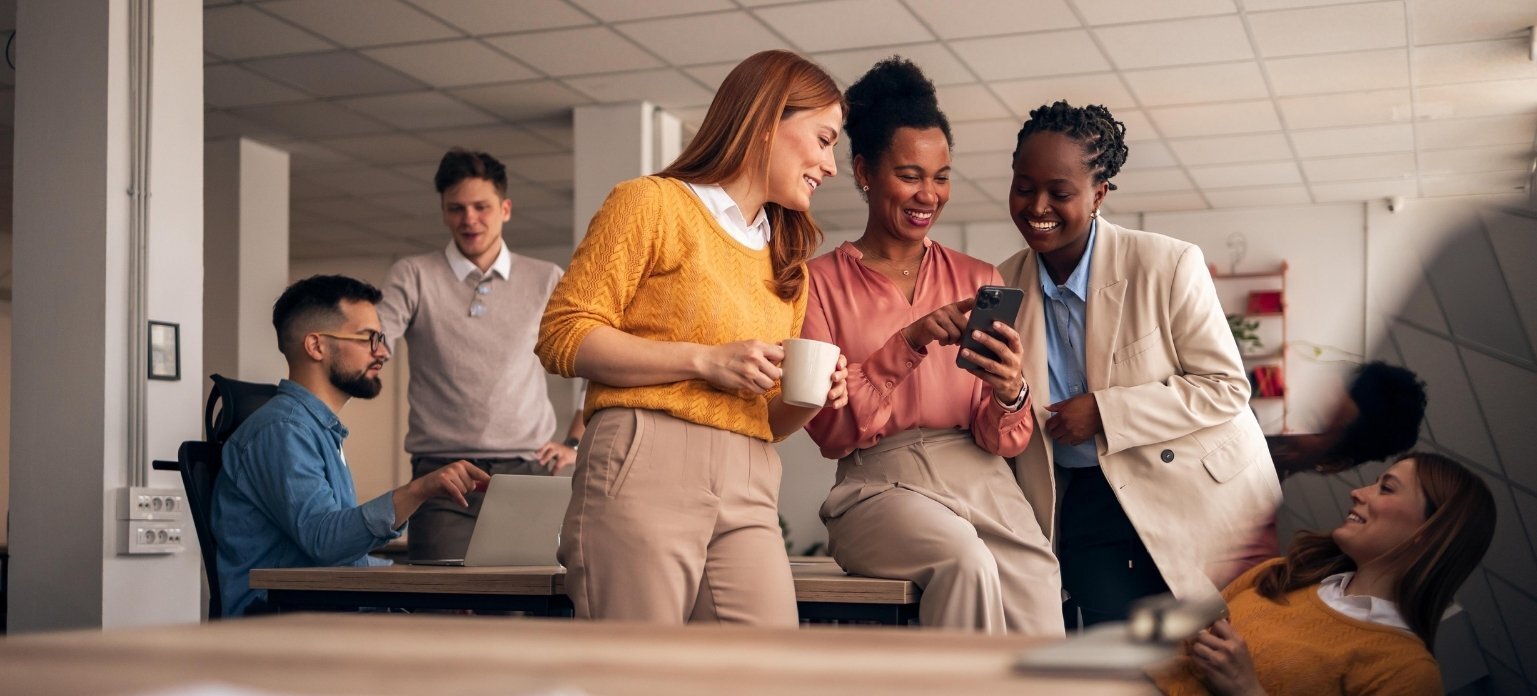

Office A: It is 12:15 PM. The only sound is the click-clack of keyboards and the hum of the air conditioner. A Junior Developer is eating a lukewarm supermarket wrap at their desk while scrolling through Instagram. The Sales Director is eating a protein bar in a glass meeting room, looking stressed. They haven’t spoken to each other in three weeks, even though they sit 10 meters apart.
Office B: It is 12:15 PM. There is noise. Laughter. The clatter of plates. In the kitchen, the Junior Developer and the Sales Director are arguing about whether pineapple belongs on pizza (it doesn’t, by the way), brought together by an incredible office-catering spread. They are sharing a meal. They are connecting. Later that afternoon, the Developer feels comfortable enough to ask the Sales Director a question about a client feature. A problem gets solved in 5 minutes that would have taken 50 Slack messages in Office A.
The difference between these two companies isn’t the furniture. It isn’t the salary bands. It is the office culture lunch.
At Officeguru, we see this every day. Food is the oldest social network in the world. When you get the food right, you don't just feed stomachs; you feed the workplace culture.
We can talk about ROI and nutritional values all day (and we do), but sometimes you just need to hear the stories. Here are real-world examples (names changed for privacy) of how employee happiness food strategies transformed chilly offices into warm communities.
The Company: A mid-sized SaaS scale-up (80 employees).
The Problem: "Us vs. Them."
The Engineering team sat on the 3rd floor. The Sales & Marketing team sat on the 4th floor.
There was a cold war brewing. Sales complained that Engineering was too slow. Engineering complained that Sales promised impossible features. They only communicated via angry tickets in Jira.
The "Before" Scenario:
Lunch was a free-for-all. Everyone grabbed their own food from nearby cafes and ate in their departmental "safe zones." The office atmosphere was tense. You could cut the air with a knife (if there had been any knives in the kitchen, which there weren't).
The "After" Scenario:
The Office Manager decided to implement a mandatory "No Desk Lunch" policy on Tuesdays and Thursdays, paired with a high-quality buffet catering berlin served in the ground-floor atrium.
But here was the trick: Long Tables.
You couldn't sit in a cluster of two. You had to sit at long, communal tables.
The Result:
"The first week was awkward," the Office Manager told us. "But by week three, the noise level doubled."
During a team bonding lunch of tacos (the ultimate icebreaker), a Sales Rep mentioned a client frustration. A Developer overheard it and said, "Wait, that's an easy fix. I didn't know it was hurting deals."
That feature was fixed the next day.
The Metric:
Cross-departmental satisfaction scores rose by 40% in the quarterly pulse survey. The silos didn't vanish overnight, but the lunch table built a bridge over them.
The Company: A creative agency (40 employees).
The Problem: The Hybrid Void.
Post-pandemic, the leadership team wanted people back in the office 3 days a week. The team was averaging 1.2 days. The vibe was dead. Office morale was low because coming into an empty office feels depressing.
The "Before" Scenario:
The fridge was stocked with soda and some sad-looking yogurts. Lunch was "on your own." Employees calculated the cost of commuting + buying a €15 salad and decided to stay home.
The "After" Scenario:
The Agency Director didn't issue a mandate. Instead, they launched "Foodie Fridays" and "Wellness Wednesdays."
They didn't just order sandwiches. They curated experiences using the Officeguru marketplace.
Wednesday: Healthy, energizing poke bowls and fresh juices.
Friday: A rotation of "Cheat Day" favorites—burgers, pizza, or a fun, interactive fingerfood catering berlin setup to end the week on a high note.
The Result:
"It became a FOMO (Fear Of Missing Out) event," the HR Lead explained. "If you stayed home on Friday, you missed the 'Burger & Beer' session at 4 PM. You missed the jokes."
Workplace community building happened organically around the food. The agency saw attendance jump to 85% on those two days without sending a single stern email.
The Metric:
Voluntary office attendance increased by 60% within two months.
The Company: A marketing consultancy (50 employees).
The Problem: The "Sad Salad" Syndrome.
This company prided itself on diversity. They had a young, values-driven team. 20% were vegetarian/vegan, and several had gluten intolerances.
The "Before" Scenario:
They ordered from a traditional caterer who viewed meat as the main event.
The meat-eaters got steak, lasagna, and roast chicken.
The vegetarians got... the side salad. Or plain pasta.
One employee wrote in an anonymous survey: "I feel like a second-class citizen every time we eat. It makes me want to look for a job that aligns with my values."
Employee satisfaction among the diverse dietary groups was tanking.
The "After" Scenario:
The Office Manager switched to a "Plant-Forward" buffet strategy using a specialized vendor from our platform.
Now, the main dishes were rich, flavorful plant-based meals (think Moroccan Tagines, roasted cauliflower steaks, truffle risotto) with high-quality meat as a side option.
The Result:
Suddenly, the meat-eaters were eating the vegan food because it tasted good. The "us vs. them" dietary divide vanished. The vegan employees felt seen and valued.
The Metric:
The company’s eNPS (Employee Net Promoter Score) related to "Inclusivity and Belonging" rose significantly. The "Sad Salad" complaints dropped to zero.
 Why is
 employee happiness food so linked?
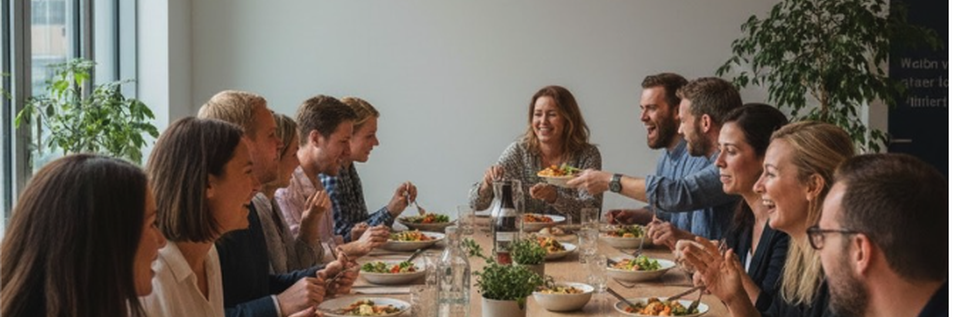
Anthropologists have known this for centuries. Eating together (commensality) creates a biological response. When we share food, our oxytocin levels (the bonding hormone) rise. We lower our guard.
In a corporate setting, we spend all day with our "armor" on. We are professionals. We are efficient. We are guarding our time.
Lunch is the only time the armor comes off.
You can't type an email while holding a burrito.
You can't be "Corporate Professional #1" when you have a bit of spinach in your teeth.
It humanizes us. And when we see our colleagues as humans, workplace community building becomes effortless.
You don't need a Google-sized budget to create this effect. You just need intention.
Here is how our most successful Office Managers build culture through food:
Designate the eating area as a tech-free zone. If someone brings a laptop, politely shame them (with a smile). "Hey, the emails will be there in 30 minutes. The lasagna won't."
Boxed lunches are convenient, but they are isolating. You grab your box and leave.
Buffet/Family Style forces interaction.
"Could you pass the bread?"
"Have you tried this sauce? It's amazing."
These micro-interactions are the glue of office morale.
Don't let lunch become "just fuel." Make it an adventure.
Week 1: Vietnamese Banh Mi.
Week 2: Italian Comfort.
Week 3: Middle Eastern Mezze.
Week 4: Danish Smørrebrød.
Use the variety to spark conversation. "Have you ever been to Vietnam?" is a much better conversation starter than "How is that spreadsheet coming along?"
Did the Sales team hit a target? Did Dev ship the code?
Don't just send a "Good job" email. Order a cake. Order a special breakfast.
Food is the universal language of celebration.
It is easy for a CFO to look at a line item for "Premium Lunch" and ask to cut it by 10%.
But how do you measure the value of the Sales Director and the Junior Developer finally talking? How do you measure the value of the team laughing together on a Friday instead of rushing home? How do you measure the cost of not having that community?
The office culture lunch isn't an expense. It is an investment in the social fabric of your company. A "Good job!" starts with a great workplace. And a great workplace usually starts in the kitchen.
Is your office lunch building culture or just feeding stomachs? Read the reviews, see the menus, and find the food that will bring your team together. Go ahead and sign-up today to transform your office kitchen into the ultimate culture-building hub.