
Employee Experience
Office Management Hacks
Case Study
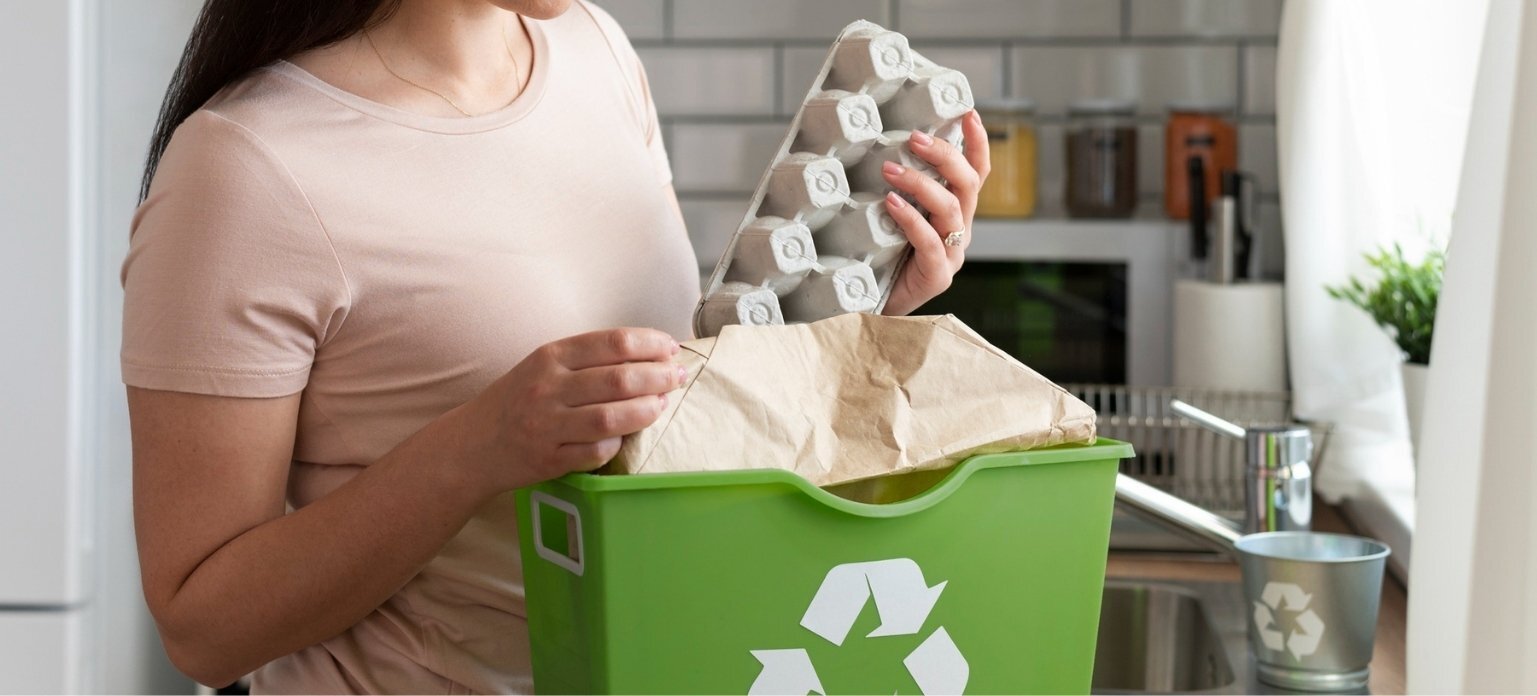

Walk into your office kitchen at 1:30 PM. Look at the trash bin.
What do you see?
If you are like most companies, you see a mountain of plastic clamshells, half-eaten sandwiches, single-use cutlery, and foil wrappers.
For an Office Manager, this is a mess to clean up. For a Sustainability Lead, it is a reporting nightmare. For a CFO, it is literally money being thrown away.
Sustainability is no longer a "nice-to-have" in the corporate world. It is a KPI. Companies are racing to hit Net Zero, reduce their carbon footprint, and polish their ESG (Environmental, Social, and Governance) scores. But while we obsess over energy-efficient lightbulbs and paperless billing, we often ignore the elephant in the room: The Lunch Buffet.
A sustainable office lunch isn't just about serving kale. It is about logistics, packaging, and supply chain management. This is why choosing the right partner for your office-catering is one of the most impactful green decisions you can make.
At Officeguru, we believe a "Good job!" starts with a clear conscience. You cannot do a good job if your workplace is generating landfill waste at record speed.
Here is how to build a green workplace food strategy that makes the planet happy—and your employees full.
Most people underestimate the environmental impact of office food waste and catering.
Food systems account for roughly one-third of global greenhouse gas emissions. In an office context, this impact comes from three main sources:
The Food Itself: (Meat production, farming practices).
The Transport: (Food miles—are those avocados flying business class from Peru?).
The Waste: (Packaging and unconsumed food).
If you are serious about office ESG goals, your catering supply chain is one of the easiest places to make a measurable impact.
For the CFOs and Sustainability Leads reading this: Employee catering falls under Scope 3 emissions (indirect emissions in your value chain).
If you are auditing your company's carbon footprint, switching from a vendor that uses plastic-wrapped imported beef to a vendor that uses locally sourced plant-based ingredients reduces your Scope 3 emissions significantly.
This turns lunch from a "perk" into a strategic sustainability tool.
The most visible enemy of eco-friendly catering is packaging.
During the pandemic, we got used to individually wrapped everything. "Hygiene theater" led to a surge in single-use plastic. Now that we are back, those habits are hard to break.
Individually portioned meals are convenient, but they are disastrous for packaging waste reduction.
The Math: 50 employees x 5 days = 250 plastic containers, 250 plastic forks, and 250 plastic bags per week. That is 1,000 pieces of plastic trash per month from one small office.
Moving back to family-style or buffet serving is the single most effective way to cut packaging waste. Opting for a hot, communal buffet catering berlin style lunch drastically reduces individual packaging.
Stainless Steel Trays: Professional caterers deliver in reusable gastro-pans. They take them back, wash them, and reuse them. Zero waste.
Real Cutlery: If you don't have a dishwasher, buy one. The energy used to run a dishwasher is significantly lower than the environmental cost of manufacturing and disposing of thousands of plastic forks.
Officeguru Tip:
When browsing our marketplace, filter for vendors who offer "Zero Waste Delivery" (reusable crates/pans). It is a simple switch that looks better on the table and better in the bin.
 We have all seen it. The tray of lasagna that is only half eaten. The salad that sat out too long and wilted.
Office food waste is a double hit. You paid for that food (financial loss), and now it is rotting in a landfill emitting methane (environmental loss). Reducing waste requires a shift from "Guessing" to "Data."
Stop ordering for 100% attendance if you know Fridays are empty. Use a flexible ordering platform (like Officeguru) to adjust your headcount 24-48 hours in advance based on actual desk bookings. If Friday only has 15 people in the office, scale back to a light, easily managed fingerfood catering berlin setup instead of a full hot meal.
What happens to leftovers?
Bad: Throwing them away.
Good: Letting staff take them home (provide biodegradable take-home boxes).
Best: Partnering with local food rescue charities if the volume is high enough.
A common mistake is ordering "one main per person" plus "three sides per person."
It is better to order slightly less food but higher quality. In a buffet setting, people tend to self-regulate. If the food is high quality, they eat it. If it is cheap filler, they leave it.
Every caterer claims to be "sustainable." But printing a green leaf on a plastic menu doesn't count.
As an Office Manager, you need to ask the tough questions.
When interviewing a new provider for sustainable food service, ask these four questions:
"Where does your protein come from?"
Red Flag: "Our supplier." (Vague).
Green Flag: "We source beef from [Specific Local Farm] and fish from [Certified Sustainable Fishery]."
"What is your menu seasonality?"
Red Flag: Serving strawberries in December (in Scandinavia/Northern Europe). This implies high food miles or energy-intensive hothouses.
Green Flag: "Our winter menu focuses on root vegetables and preserved items."
"How do you handle delivery logistics?"
Red Flag: One diesel van for every three orders.
Green Flag: Electric fleet, cargo bikes (for city centers), or consolidated delivery routes.
"What happens to your kitchen waste?"
Red Flag: "We throw it out."
Green Flag: "We compost organic waste and track our waste percentage weekly."

You cannot talk about environmental catering without talking about meat.
Beef has a carbon footprint roughly 10-20 times higher than poultry or plant-based proteins.
However, if you announce "We are banning meat," you might face an employee revolt. Food is emotional. People don't like having choices taken away.
Don't ban. Nudge.
The "Default" Switch: Make the vegetarian option the default. Employees have to actively opt-in for the meat option. Studies show this drastically increases plant-based consumption without people feeling restricted.
Meatless Mondays (Rebranded): Call it "Green Monday" or "Planet Plate." Feature delicious, hearty plant-based meals (falafel, rich curries) rather than "salad."
The "Less but Better" Rule: Serve meat less often, but when you do, serve great meat. A high-quality organic roast once a week is better than cheap, factory-farmed deli meat every day.
If you try to audit every local deli for their sustainability practices, you will never get any other work done.
This is the value of the Officeguru marketplace. We do the heavy lifting.
We Verify Claims: We check if "local" actually means local.
We Consolidate Logistics: Instead of five different vans driving to your office for coffee, fruit, and lunch, we help you consolidate vendors to reduce delivery emissions.
We Enable Flexibility: Our platform allows you to switch vendors instantly. If a supplier starts slipping on their packaging standards, you can move to a greener option with a click.
Ready to clean up your act? Here is your step-by-step guide to a sustainable office lunch.
Phase 1: The Audit (Week 1)
Check the trash bins after lunch. What is the biggest item? (e.g., Plastic cups? Foil?)
Ask your current vendor: "Do you offer reusable trays?"
Calculate your average daily food waste (visual estimate: 10%? 30%?).
Phase 2: The Switch (Week 2-4)
Switch to bulk/buffet serving where possible.
Purchase real crockery and cutlery (or rent via Officeguru).
Implement a "dynamic headcount" rule for ordering (adjusting based on hybrid schedules).
Phase 3: The Culture (Ongoing)
Communicate the "Why" to the team. "We are switching to reusable trays to save 5,000 pieces of plastic this year."
Introduce one high-quality plant-based day per week.
Survey the team: "Do you prefer the new green menu?"
There is a misconception that "sustainable" means "boring" or "expensive."
The reality is the opposite.
Local, seasonal food tastes fresher than imported food that has sat in a truck for a week.
Real plates feel more premium than flimsy plastic.
Not wasting money on uneaten food frees up budget for better ingredients.
A green workplace isn't just about saving the polar bears (though that's nice too). It is about running a smarter, more efficient, and more thoughtful office.
Stop feeding the landfill. Start feeding your team with a clear conscience. Ready to shrink your carbon footprint and upgrade your menu? Go ahead and sign-up today to explore our curated list of sustainable, eco-friendly catering partners.