
Office Management
Employee Experience
Case Study


Catering, cleaning, handymen, coffee, snacks: behind every well-running office there are many service providers, and behind each of them, a supplier selection someone has to make. Usually, that's one person who's also responsible for ten other things. If you organise corporate catering in Berlin, for example, you compare offers, clarify menus, align budgets, and finally present everything to management. And next week, it all starts again.
This article is for everyone juggling People & Culture and office management at the same time. We show how office managers from Berlin startups have simplified their supplier selection – with real experience instead of procurement theory.
All quotes come from video interviews with Officeguru and have been lightly edited for clarity. This article is part of our series featuring five voices from Berlin offices.
Office Manager Tasks: What Office Managers Really Do – 5 Voices from Berlin Offices
If you search for supplier selection, you quickly land on guides for procurement and quality management: supplier evaluation, weighted scoring, assessment matrices. That's helpful when a purchasing department sources materials for production.
In the office, reality looks different:
That's why supplier selection in the office needs different criteria. And above all, often: less effort.
Polina is People & Culture Specialist at Vay and also looks after office management. She describes what organising service providers used to look like: contacting different vendors, collecting offers, comparing, choosing and presenting to management. For every category, all over again.
It looks similar for Lidia. Her team at Tourlane is made up of two people and covers facility management, everything around travel, and events – plus onboarding, support for remote employees and culture initiatives. That leaves little room for researching and vetting individual providers.
On top of that comes constant switching. Polina's job is a mix of focused work and lots of short requests in between. Every vendor search pulls her out of whatever she's working on.
Salah, Workplace Experience Manager at Circula, knows another side of this fatigue: the inbox. "If I could, I would remove talking to new people trying to sell me stuff all the time." Of course an office needs supplies and a well-stocked pantry. "But so much time goes every day into answering emails from people trying to sell me the same service. If I need it, I will reach out."
So the problem isn't only finding the right service provider. It's the sum of research, comparison, coordination and distraction.
Today, Polina orders her team's weekly lunch catering through Officeguru. Her effort: "I spend 30 seconds on this per week. The only thing I do is confirm the number of people we're going to feed for lunch this week."
The bigger difference, though, happens before the first order. Instead of doing the research herself, Polina hands over her requirements: "These are our needs, this is our budget." The reply, in her words: "Okay, leave this to me. I'm on it." The research, the comparison and the suggestions – including options below or above budget – come back to her.
The time she saves goes into other work. Polina can now focus more on engagement and strategic people topics, without constantly jumping between tasks. Her one word for Officeguru: "Convenience."
Lidia, Senior Workplace & Culture Manager at Tourlane, has used Officeguru for handyman services and catering. Her impression:
"What I enjoy about Officeguru is that you simplify that part. I think that I could always rely on you."
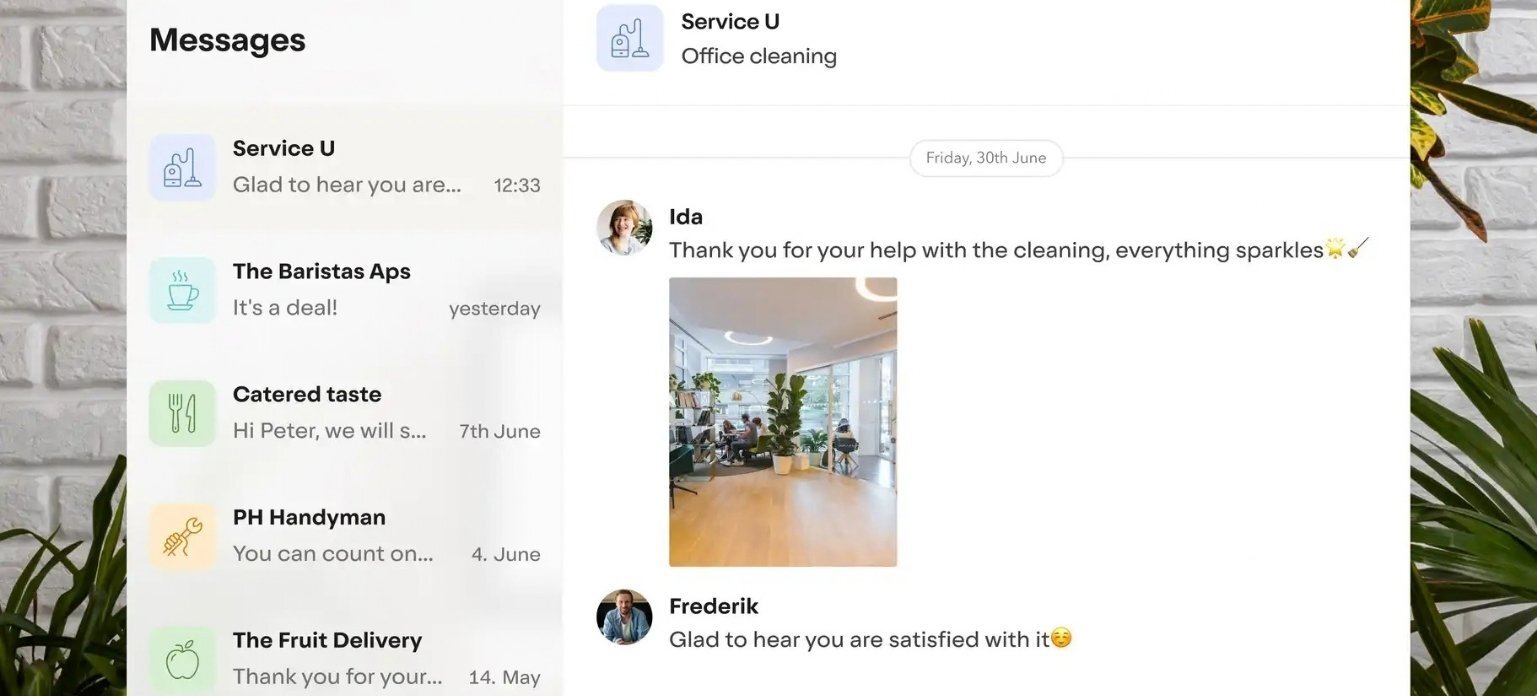 Whether you're finding service providers for a single category or looking for one partner for several services, these criteria came up as decisive in the interviews.
Reliability before price: A cheap provider who fails to deliver once costs you more time than any price difference. Lidia names reliability first.
Trustworthy partners: Whoever comes into your office, repairs something or delivers food becomes part of your working day. For Lidia, the partners were "very trustworthy" – a point worth checking with every new provider.
Speed of sourcing: How long does it take from request to booked service? For Lidia, "the research part was very fast."
Inclusive options: Especially with corporate catering, it matters whether everyone gets something out of it. Lidia makes sure vegan options and different dietary limitations are considered.
Budget flexibility: A good partner works with your budget, instead of selling you a standard package.
Everything in one place: Morena, Member Success Manager at Lukso, calls this her biggest office manager trick: using Officeguru "to reduce the time I need to check suppliers, and to be sure that everything I need is in one place." That's exactly the idea behind a B2B marketplace for office services.
The relationship: Polina describes it as a "healthy relationship" in which she feels treated with a lot of attention and respect. That sounds soft, but it makes all the difference day to day: you want to be able to raise a problem without having to explain yourself.
Not every task needs to be outsourced. Some things work well in-house, especially if you have a fixed, proven provider. This comparison helps you decide:
| Organise everything yourself | One partner for several services | |
|---|---|---|
| Research | You search, compare, and vet every provider yourself | Hand over requirements and budget, receive suggestions |
| Time spent | Recurring, often underestimated | Minimal for routines (Polina: 30 seconds a week) |
| Control | Direct line to every provider | One contact for many categories |
| Presenting to management | You prepare every option yourself | Comparable suggestions are already there |
| Works well if … | You have a few stable providers | Many categories come together and your time is short |
The honest answer: the more categories you look after and the less time you have for them, the more a partner pays off. If you only have one service provider who's been running perfectly for years, there's nothing you need to change.
 Budget planning is often the part that creates the most back-and-forth. These steps help, including for office catering in Berlin:
Snacks and coffee seem small, but they're what your team sees every day. Lidia and her team are usually the first in the office to make sure the fridges are full, and the coffee machine is working before everyone else arrives.
Three ideas from the interviews:
A quick weekly check is often enough to make sure nothing runs out:
The question "What's left over?" matters just as much as "What's missing?". It shows you where you can shift budget, instead of simply ordering more.
 When you need to present options, a simple one-page template helps:
For the recommendation, one clear sentence is enough, for example: "I recommend option B because it's within budget, covers vegan alternatives and only takes me a few minutes a week." That way, management can decide quickly without having to read every offer themselves.
The "internal effort" point often gets forgotten. Yet it's frequently the strongest argument: time you don't spend on vendors goes to your team.
Supplier selection in the office isn't a procurement project – it's a recurring part of your day. The experiences from Berlin show: the biggest lever isn't the best price, but bundling research, comparison and coordination. Many vendors become one partner, hours become seconds – and administration turns back into time for the people in the office.
Every office is different – and so are the gaps in it. If you'd like to talk through where your office and your team need support right now, whether that's lunch, coffee, maintenance, or something you haven't found the right provider for yet, book a call with us. Pick a time below that suits you: 15 minutes is often enough to see where Officeguru can take something off your plate.